






Why is surface preparation critical?
Why is surface preparation critical for bonded fasteners? Clean, properly treated surfaces allow adhesives to bond effectively, ensuring stronger, more consistent, and long-lasting joints.
Short Answer:
Surface preparation ensures a clean, active surface for adhesive bonding, which results in strong, consistent, and durable joints that perform reliably in demanding environments.
Full Answer
Proper surface preparation is one of the most critical factors in achieving a reliable adhesive bond. In adhesive-bonded fastening, the strength of the joint depends not only on the adhesive itself, but on how effectively it adheres to the underlying material. The adhesive must chemically and mechanically interact with the substrate surface to form a durable connection that is capable of transferring load, resisting fatigue, and withstanding environmental exposure over time. Without proper surface preparation, even the best adhesive or most advanced bonded fastener cannot achieve optimum strength.
In aerospace, defense, and advanced manufacturing applications, every bonded joint is expected to carry structural loads and maintain the integrity of its bond through years of service, all under conditions involving vibration, temperature variation, and environmental stress. A clean, properly treated surface ensures the adhesive wets the substrate evenly, forms a continuous molecular bond, and prevents the occurrence of weak boundary layers, such as oils, oxidation, and residues, that commonly cause premature bond failure. In short, proper surface preparation transforms any surface, whether smooth or contaminated, into one that is chemically active and mechanically ready for bonding, laying the foundation for predictable performance and long-term reliability.
Key reasons surface preparation matters:
- Adhesion mechanics: Adhesive bonding transfers load through molecular adhesion, mechanical interlock, and surface contact. A clean and properly roughened surface maximizes the effective bond area and enables full adhesive wetting.
- Contamination avoidance: Oils, release agents, oxidized layers, dust, moisture, and other residues interfere with adhesive chemistry and weaken the bondline. Even “invisible” films can reduce joint strength significantly.
- Repeatable performance: By standardizing surface treatment through cleaning, abrasion, and inspection, you reduce variability in installation and ensure consistent structural performance across assemblies.
- Long-term durability under environmental pressure and cyclic loading: A poorly prepared surface may initially appear adequate, but under cyclic loads, temperature changes, moisture ingress, or vibration, the bond can degrade prematurely. Proper surface prep improves fatigue resistance, environmental resilience, and service life.
Best practices for surface preparation with Click Bond bonded fasteners:
- Remove contamination. Start by using a solvent wipe on the surface of the substrate to remove oils, release agents, stearates, and residues.
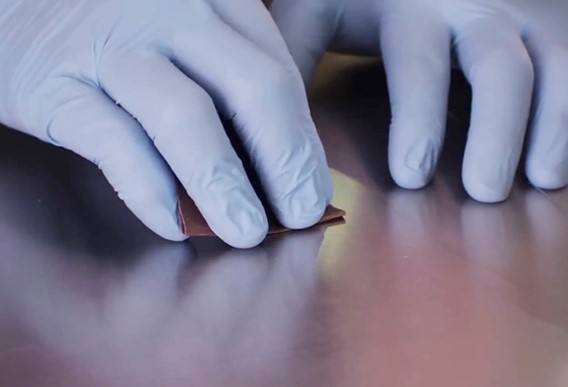
- Create appropriate surface roughness. For metallic or composite substrates, follow the specified roughening method. Abrade the surface with a Scotch Brite pad or pure aluminum oxide abrasive paper to achieve the required surface texture and ensure good adhesive anchoring.
- Dry, inspect, and preserve the surface. After abrading the surface, use another solvent wipe to clean the surface again, allow any trapped moisture to evaporate, then visually inspect the surface for remaining dust or debris before applying adhesive.
- Minimize any delay between prep and bonding. Once the surface is prepared, ensure that adhesive bonding occurs within a controlled timeframe, as indicated by your knowledgeable Click Bond representative, to prevent new contamination or oxidation. The ideal timeframe in which to bond depends upon the substrate materials.
- Complete qualified process documentation. Use the installation procedure and adhesive manufacturer instructions provided by Click Bond and the adhesive supplier (see support section). Maintain process controls, records of surface-prep method, and installer sign-off for quality assurance and auditing purposes.
In summary: Surface preparation is a critical step in the bonding process. Without it, even the highest-quality fastener or adhesive will underperform because you cannot achieve the optimum bond between the fastener and the substrate. By adhering to robust surface-prep protocols, you ensure that bonded fasteners deliver the structural reliability, qualification compliance, and long-term performance that aerospace, naval, and defense applications demand.